
How to Take Direction in an Audition Without Losing Your Character – Or Your Mind
You finish your audition, and the casting director says, “That was good. Nice. Let’s try it another way.”
Suddenly, everything you prepared feels uncertain. Was your first choice wrong? Should you change the entire character? What exactly do they want? Why don’t they say?
Take a breath. A redirect is an opportunity to show that you can listen, adjust, stay connected to the scene and give them what they want. Learning how to take direction in an audition is a skill and one all actors must develop. This can only happen through consistent practice.
A Redirect Is Information, Not a Verdict, Not a Judgment
Actors can be quick to interpret direction as criticism. But being asked for another approach does not necessarily mean your first performance missed the mark. Perhaps they are asking you to do something that might even earn you a bigger and better role.
The casting director may want to explore a different possibility, see how you respond to an adjustment, or bring your performance closer to the director’s vision.
Your job is to hear the request without turning it into a negative.
If you are busy defending your first choice in your head, you may miss the information that could help you make the next one. It happens often.
Change What You Are Doing to the Other Person
Suppose you perform a scene in which your character confronts someone who has betrayed them. Your first approach is angry and accusatory.
Then you hear: “Try it with more warmth.”
Simply smiling or softening your voice may change the surface of the performance without changing what is happening underneath.
Instead, consider what warmth might accomplish. Perhaps your character is trying to reassure the other person so they will finally tell the truth. Perhaps you want to remind them of the closeness you once shared.
The betrayal still matters. Your objective may remain the same. But your approach to the other person changes.
That gives you something to play beyond “be warmer.”
Keep Your Preparation Flexible
Preparation should give you a foundation you can build on and dance with.
Know the circumstances. Understand the relationship. Identify what your character wants and why it matters. Then allow yourself more than one way to pursue it.
If you have rehearsed every pause, gesture, and inflection into a fixed pattern, a redirect can feel like someone has pulled the floor out from under you.
Strong preparation leaves room for discovery. You can know your character deeply and still be surprised by what happens in the scene. Be attached to your character but not the performance. This is the key to being the kind of actor directors dream of working with.
Listen Before You Explain
When you receive a note, resist the urge to immediately explain why you made your original choice. It doesn’t matter and nobody really cares. They just want you to get the job by doing the job.
Listen to the whole direction. Take a moment to process it. Then make the adjustment.
If you truly do not understand the request, ask a brief, specific question. For example: “When you say more casual, do you mean I’m trying to hide how much this matters?”
A useful question helps you act. A lengthy discussion of your interpretation can pull you further away from the scene. Make sure it is a legitimate question and just an attempt at staying in the room longer.
Let the Adjustment Be Visible
Sometimes actors understand a note intellectually but make such a small adjustment that the next take feels almost identical.
Give yourself permission to explore the direction fully. If you are asked to be more playful, let that change how you pursue the other person. If you are asked to make the moment more urgent, allow yourself to need an answer now.
The changes will often involve your character’s objective or their emotional life. Your job is to understand the request and then deliver.
And once the scene begins, return your attention to your partner. Don’t censor yourself or judge yourself. Both will take you out of the scene.
Practice Taking Direction Before Your Next Audition
An audition is a difficult place to learn flexibility for the first time.
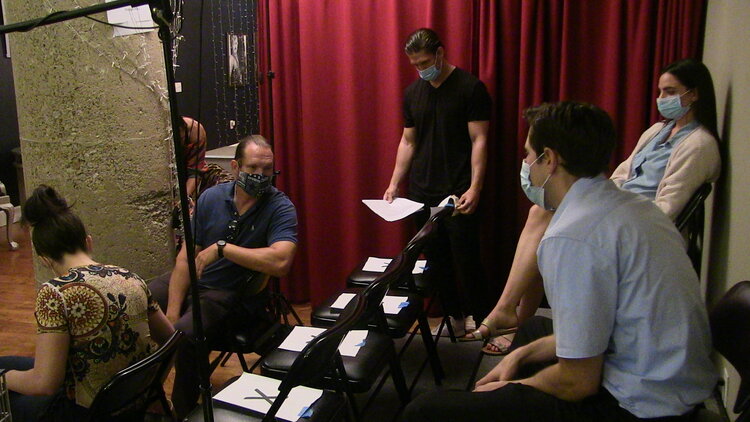
Regular scene study gives actors a place to make choices, receive feedback, and try again. You begin to recognize the difference between understanding a note and actually applying it. I tell actors all the time that there is no one way and no right way to do this. Their only job is to be effective. This means, interesting!
You also learn that an adjustment does not erase your instincts. It expands your possibilities.
At TBell Actors Studio in Dallas, scene study and character analysis give actors a foundation for making specific choices while remaining responsive to coaching and their scene partners.
The goal is to arrive prepared, listen fully, and remain available for something you did not anticipate.
That is part of the work and often where the most interesting acting begins.
Looking for acting classes in Dallas? Visit TBell Actors Studio’s website to schedule a class observation and see the work firsthand.