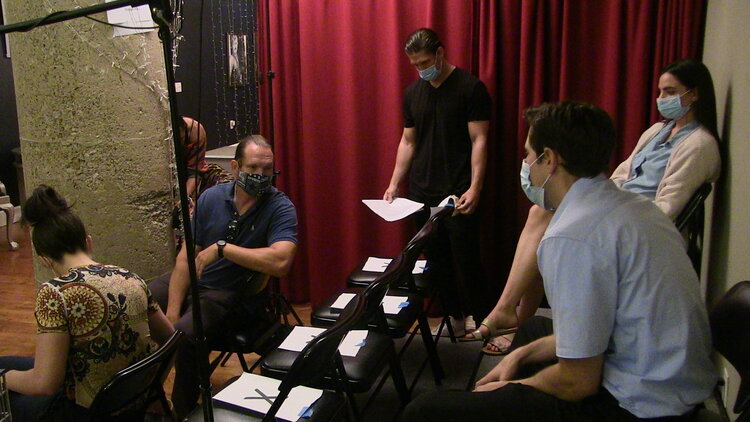
Scene study character analysis is the one skill that separates actors who feel truthful on screen from those who merely recite lines. For over a century, this principle has remained unchanged, tracing back to a single question first asked by Konstantin Stanislavski: how do actors create performances that feel real?
Consequently, nearly every major acting technique taught today, including Meisner, Strasberg, Adler, Hagen, and Chubbuck, evolved from the foundation Stanislavski built. He believed actors should not simply imitate emotions or memorize lines. Instead, he insisted they deeply understand who their character is, what they want, what stands in their way, and how they pursue it. In other words, he taught what we now call scene study and character analysis.
Why Scene Study Character Analysis Is the Foundation of Great Acting
At TBell Actors Studio, scene study character analysis sits at the center of everything we teach. Acting techniques are tools, but understanding character is the actual craft. Therefore, an actor can learn exercises, emotional access methods, and audition strategies, yet still deliver a superficial performance if they don’t understand the person they’re playing. The most compelling actors know their characters so well that every line and choice comes from a clear sense of who that person is and what they want.
When our students study a scene, we never stop at the obvious answers. Instead, we ask deeper questions: What does the character want? Why do they want it? What happened before this moment? What fear is driving them? What are they willing to risk? As a result, those questions reveal the layers beneath the dialogue, and that’s where truthful acting lives.
Going Beyond Traditional Scene Study
While many acting schools offer scene study as part of a broader curriculum, TBell Actors Studio takes it further. Scene study and character analysis aren’t simply one class among many here. Rather, they are the foundation of our entire training approach. In fact, we are the only acting studio in Dallas whose primary focus is the deep study of scenes and character development, combined with archetypal analysis, to help actors build unforgettable characters.
This distinction matters. Most acting training focuses on what a character is doing. However, we also explore why they’re doing it through the lens of archetypes, patterns that psychologist Carl Jung identified as universal forces appearing across cultures, myths, and stories.
The Power of Archetypes in Character Work
The Boss. The Charmer. The Nurturer. The Bad Boy. The Spunky Kid. The Free Spirit. The Waif. The Warrior. And Others… These archetypes apply to both male and female characters, and they exist because they reflect fundamental aspects of human nature. Similarly, when actors understand the archetypal energy driving a character, they gain access to deeper motivations and richer choices.
For example, a character may be written as a loving father on the surface, but underneath, he may be operating from the Warrior archetype. Likewise, a seemingly confident CEO may actually be driven by the Waif’s fear of failure, while a romantic lead may actually be expressing the Lost Soul’s desire for connection. To our knowledge, no other acting studio in Dallas combines rigorous scene study, character analysis, and archetypal work the way we do.
Training Actors, Not Just Performers
Ultimately, our goal isn’t to teach actors how to “act.” Instead, it’s to teach actors how to think like actors. When students learn to analyze scripts, break down characters, and recognize archetypal patterns, they become independent artists who no longer need someone else to tell them how to play a role.
Casting directors and audiences respond to authenticity, even when they can’t explain why one performance feels real and another feels forced. Authenticity comes from understanding. Understanding comes from analysis. And analysis comes from doing the work, which is why scene study character analysis remains at the heart of actor training more than a hundred years after Stanislavski began.
Frequently Asked Questions
What is scene study in acting?
Scene study is the process of breaking down a scene to understand a character’s objectives, obstacles, and relationships, so an actor can build a truthful performance rather than simply reciting lines.
How do archetypes help actors build characters?
Archetypes reveal the deeper psychological patterns driving a character’s behavior, helping actors move beyond surface-level choices to create richer, more memorable performances.
Why is character analysis important for actors?
Character analysis gives actors the tools to understand who they’re playing, which builds authenticity, the quality casting directors and audiences respond to most.
Ready to deepen your craft? Visit TBell Actors Studio to learn more.
Want to be notified when Claude responds?