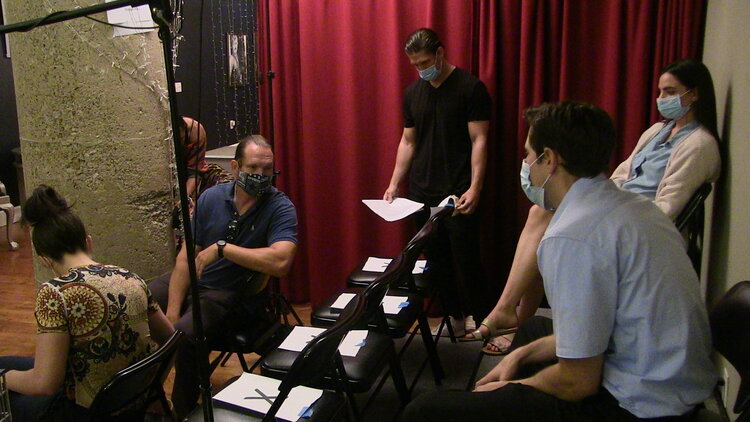
Knowing how to prepare for an audition in 24 hours is one of the most essential skills an actor can build. The call comes late. The sides land at 9 p.m. The appointment is tomorrow morning. Most actors panic. However, the ones who book stay calm and get to work.
After 25 years training actors in Dallas, I can tell you this: a short runway does not have to mean a shaky audition. Additionally, it does not mean you have to stay up all night. What it means is you have to get smart about where your energy goes. Here is the exact process I teach my students at TBell Actors Studio.
Step 1: Read the Sides Once, Then Trust Your Gut
The first thing most actors do is read the sides over and over until the words blur together. Instead, read them once, slowly, and notice what you feel. Not what you think the character feels. What YOU feel. That first read is your instinct talking. Furthermore, it is the most honest response you will get. Trust it. You will return to analysis soon enough, but your gut response is data you cannot manufacture later.
Step 2: Identify the Archetype
Every character is built on a recognizable human truth. Therefore, before you work the lines, ask yourself who this person is at their core. Are they a protector? A seeker? A trickster? Someone fighting to hold their world together? Transitioning from the words on the page to the human being underneath them is what separates actors who are interesting from actors who are just accurate. When you name the archetype, you stop performing the scene and start living it.
Step 3: Find the Want and Make It Personal
Your character wants something in this scene. Find it, and then make it matter to you personally. Do not play a want that is abstract. “She wants justice” is a concept. “She needs this person to finally see her” is something you can feel in your body. Consequently, the more specifically you connect the character’s want to something true in your own experience, the more present you will be in the room. This is the core of what I teach in scene study, and it works just as well on a 24-hour deadline as it does after three weeks of rehearsal.
Step 4: Learn the Lines, Then Put Them Down
Once you understand what you are playing, learn the lines well enough that you are not hunting for words. You do not need to be perfectly off-book. Instead, you need to be free enough to listen and respond. There is a difference. After you have gone through the material a few times, put the sides down and do the scene from memory. Let yourself make mistakes. What you are building is not a perfect recitation. You are building a living relationship with the material.
Step 5: Sleep
This is not a throwaway tip. Sleep is when your brain consolidates everything you rehearsed. Therefore, staying up until 2 a.m. drilling lines will not serve you. Going to bed with the material in your body and letting your nervous system process it overnight will. Set an alarm, protect your rest, and trust the work you already did.
Step 6: Warm Up Your Instrument the Morning Of
Additionally, give yourself at least 30 minutes before you leave the house. Physical warm-up first. Shake out your body, loosen your jaw, and do some breath work. Then run the sides one more time, not to perfect them, but to remind yourself what you are playing. After that, stop. You do not need to grind the material on the day of the audition. You need to arrive open. For a great physical warm-up guide, check out this resource from MasterClass on how actors warm up before a performance.
Step 7: Walk In to Give, Not to Get
The most important shift you can make before you walk through that door is this one. You are not walking in to prove something or to be judged. Instead, you are walking in to offer something. A point of view. A human moment. A specific and truthful experience of this scene. Casting directors are not looking for the most polished actor in the room. Rather, they are looking for the one they cannot look away from. That quality does not come from perfection. It comes from presence.
FAQ
How long does it take to prepare for an audition? With focused work, most actors can prepare well in 3 to 4 hours the night before, plus a 30-minute warm-up the morning of.
What should I do if I get sides the same day? Prioritize understanding the want and the archetype first. Lines come second. Presence is always first.
Does sleep really help with memorization? Yes. Research consistently shows that sleep strengthens memory consolidation. Protecting your rest is part of your preparation.
Ready to build the kind of craft that makes 24 hours feel like plenty of time? Visit TBell Actors Studio and join us in scene study.