What are the common words used on a movie set or theater stage?
The acting world uses a specific “shorthand” to ensure safety and artistic precision. Knowing common acting terms like Blocking, Off-Book, and Call Time is essential for every performer. These terms allow you to communicate seamlessly with directors and crew members. Furthermore, understanding this language helps you stay professional on any Dallas film location.
Acting is a thrilling experience that blends creativity and teamwork. However, beginners must understand the language of the stage to excel in their craft. Whether you are on a soundstage or in a theater, clear communication is vital. Here are the essential terms every student at the Theresa Bell Actors Studio should know.
Stage Directions: Upstage, Downstage, and Sides
Upstage refers to the point furthest from the audience. Conversely, Downstage is the point nearest to the lens or audience. This terminology comes from original sloped stage designs. Furthermore, Stage Left and Stage Right are always relative to the actor’s viewpoint when facing the audience. In film, you will also hear Camera Left and Camera Right, which are relative to the camera lens itself.
Technical Essentials for the Set
- Blocking: This is the process of determining the positioning and movements of actors. Proper blocking ensures you stay “in frame” for the Dallas camera crew.
- Call Time: This is your designated arrival time. Call time is non-negotiable because it allows for hair, makeup, and technical prep.
- Off-Book: This is the point where you have completely memorized your lines. Theresa Bell insists that students be off-book to focus entirely on the performance.
- Cue: A signal, whether verbal or visual, to start a specific line or action.
The Environment: Props, Sets, and the House
Props are the objects used by actors to enhance the storytelling. Meanwhile, the Set refers to the physical environment and scenery. In a theater setting, the House refers to the area where the audience sits. Understanding these areas helps you navigate the workspace with confidence.
Rehearsal Phases and On-Set Commands
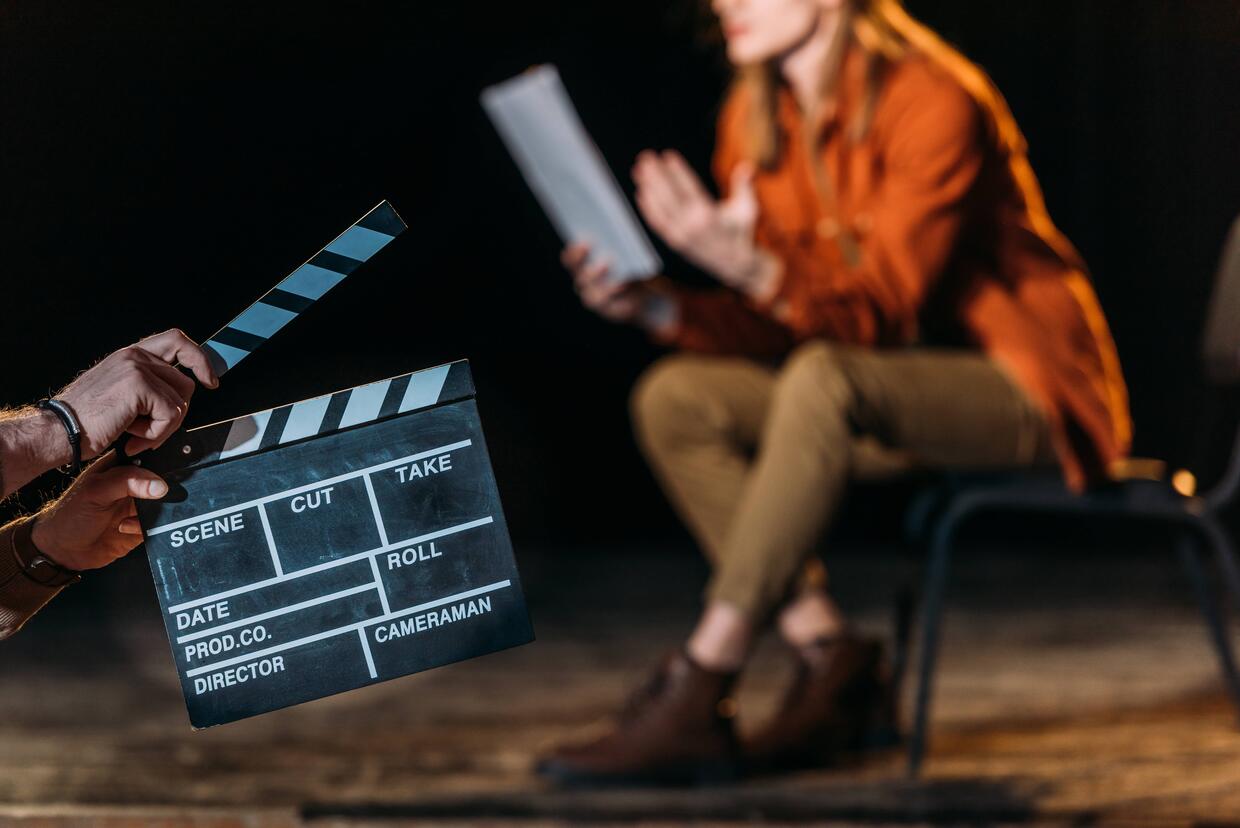
A Tech Rehearsal focuses on integrating lights and sound. Subsequently, the Dress Rehearsal serves as the final run-through in full costume. When you move to a film set, listen for these three commands: Speed (sound is recording), Rolling (camera is recording), and Action (the scene begins).
Master the Lexicon at Theresa Bell Actors Studio
The best way to learn these terms is through hands-on experience in a professional Acting Class. Our classes in Dallas provide the context needed to use this vocabulary naturally. Consequently, you will gain the confidence to excel on any professional set.
Conclusion: Ready to build a strong professional foundation? Book an acting class at TBell Actors Studio today and master the language of the industry.