The Academy AI acting ban is now official, and every working actor needs to understand what it means for the future of our craft.
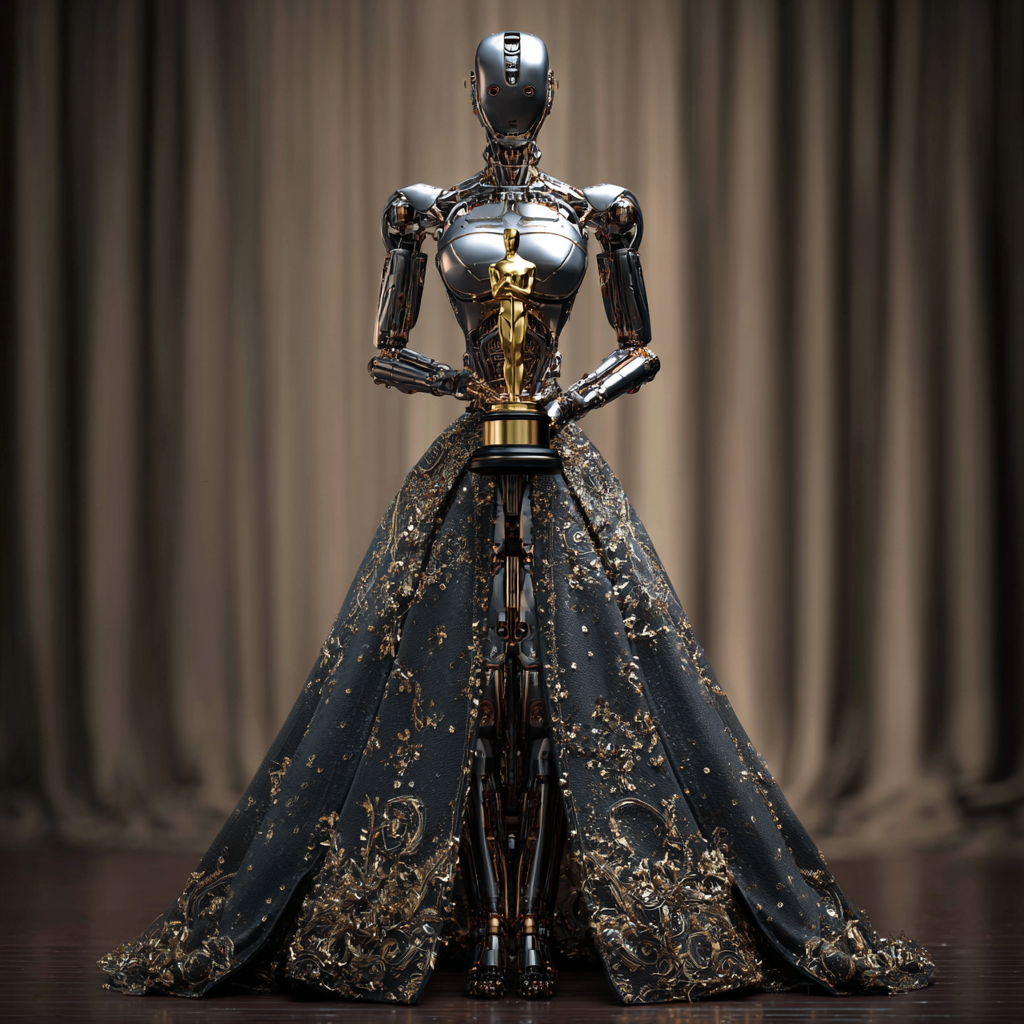
On May 1, 2026, the Academy of Motion Picture Arts and Sciences made a landmark announcement. The Academy's Board of Governors issued a sweeping update to the Oscars eligibility requirements, explicitly stating that AI-generated actors, digital replicas, and scripts primarily written by AI will not be eligible for Academy Award nominations. Additionally, the Academy declared that only acting performances demonstrably performed by humans with their consent will be considered eligible to be nominated at the ceremony.
As a Dallas acting coach with 25 years in this industry, I believe this ruling sends a message that goes far beyond awards season. It is a declaration about the irreplaceable value of the human actor. It simply cannot be separated from a true human experience.
What the New Rules Actually Say
Under the new guidelines, a film will no longer be eligible if its screenplay or acting performance is generated by non-human systems. Only works demonstrably executed by human beings will qualify for the prestigious acting and writing categories. Furthermore, the Academy reserved the right to request additional information about the nature of AI use and the extent of human authorship on any submitted film.
Consequently, this is not a soft guideline. The Academy has given itself new investigative powers to audit technical data from production studios. Therefore, filmmakers cannot simply claim human authorship. They must be able to prove it. The 99th Academy Awards in 2027 will be the first to operate under these new rules.
Why This Ruling Matters for Working Actors
However, this ruling is about much more than Oscar gold statues. It is about the economic and cultural survival of the human performer. The film industry has spent the last two years wrestling with a difficult question: can a machine replace what a trained actor brings to a role? The Academy has now answered that question clearly.
Moreover, this ruling validates something that actors have always known. The ability to access genuine emotion, to listen, to adapt, and to connect with another human being on screen is not something that can be calculated or generated. It must be lived. The Academy emphasized that while it is believed that machines can calculate the perfect script or simulate the perfect tear, they cannot experience the creative spark of human artistry. I once heard a writer when asked about AI writing a full script say “Yes, it can. It will be as if it were written by a very smart fourth grader.” I have played with AI enough in writing to confidently say that this is an accurate opinion.
For actors training right now in Dallas and across Texas, this is genuinely encouraging news. Similarly, for writers working on original screenplays, the message is clear: your human voice has value, and the industry's most prestigious institution is protecting it.
What This Means for Your Acting Career
So, what should actors take away from this ruling? First, your training matters more than ever. The Academy is doubling down on biological performance, which means the investment you make in your craft, your technique, your emotional range, and your professional preparation is directly aligned with where the industry is heading.
Additionally, this ruling should motivate you to deepen your skills rather than worry about being replaced. Therefore, now is exactly the right time to sharpen your audition technique, build your reel with real performances, and commit to the kind of training that makes you undeniably human on camera.
The Screen Actors Guild has long advocated for protections like these, and this Academy ruling reinforces that collective momentum. Consequently, the path forward for actors is not to compete with AI. It is to be so authentically human that there is no comparison.
Frequently Asked Questions
Does the Academy AI acting ban affect streaming films? Yes. Any film seeking Oscar eligibility, regardless of where it is distributed, must comply with the new rules on human authorship and performance.
Can filmmakers use AI tools at all under the new rules? The Academy has not banned all AI tools from production. However, the screenplay must be human-authored and the performance must be demonstrably delivered by a human actor to qualify for nominations.
Does this ruling affect actors in Texas specifically? The ruling applies to all films seeking Oscar consideration, including independent films produced in Texas. It reinforces the value of trained, working actors at every level of the industry.
What should actors do to prepare for this new landscape? Focus on your training, build authentic performance credits, and work with coaches who understand both the craft and the business. That combination is what separates a working actor from a hopeful one.
Sonnet 4.6