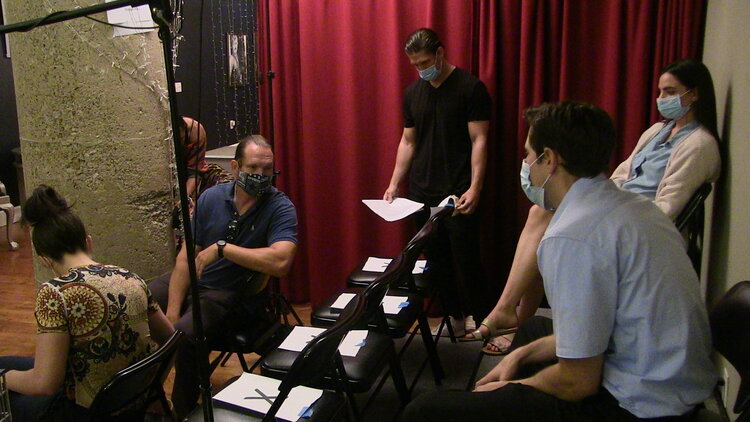

Actors and rejection are inseparable parts of the same journey, and the sooner you accept that, the stronger you become. One of the hardest things about being an actor isn't memorizing lines, crying on cue, or figuring out what "play the opposite" means. It's rejection. Good old-fashioned, soul-crushing, "Thank you so much, we went another direction" rejection.
If you stay in this business long enough, you will experience all of it. The audition you KNOW you nailed and never hear about again. The callback where they hug you, tell you how brilliant you are, and then cast someone else. The role that mysteriously goes to the producer's cousin's yoga instructor. The commercial where they wanted "real people" and somehow hired a model from Milan.
Welcome to acting.
The Truth Nobody Tells Young Actors
Here's what most people won't say out loud: rejection is not a sign you're failing. It's a sign you're participating. Additionally, most successful actors hear "no" far more than "yes." Far more. You just don't see the thousands of auditions that happened before the Netflix series.
Moreover, sometimes rejection has absolutely nothing to do with talent. You were too tall. Too short. Too pretty. Not pretty enough. Too polished. Too raw. You looked too much like the lead actor's sister. I once heard of an actor losing a role because he reminded the producer of a guy who stole his parking spot in 1998.
Therefore, you cannot build your self-worth on casting decisions made by exhausted people eating protein bars under fluorescent lighting.
How Actors Survive Rejection
So, how do working actors actually survive this? First, stop treating auditions like marriage proposals. An audition is not "please validate me as a human being." Instead, it's simply "here's my take, thanks for having me." That mindset shift changes everything.
Second, focus on the work, not the result. Consequently, the actors who last are the ones who fall in love with the craft itself. The scene. The truth. The story. The connection. The growth. Because if your only joy comes from getting cast, this business will emotionally body slam you into another dimension.
Third, build a life outside the business. Have friends. Touch grass. Go antiquing. Bake something. Fall in love. Watch birds. Travel. Live. Similarly, actors who only exist for auditions become emotionally brittle. Your life feeds your art.
Stop Comparing, Start Recovering
Furthermore, stop comparing yourself to everyone else. Comparison is creative poison. There will always be someone younger, prettier, richer, or more connected, with cheekbones carved by the gods themselves. Stay in your lane. There is only one you. And ironically, that's the thing casting ultimately wants anyway.
Additionally, learn to recover quickly. Professional actors don't avoid disappointment. They recover faster. Feel bad for one evening. Eat queso. Watch a murder documentary. Complain to your acting coach. Then get up the next morning and get back to work. That resilience is what separates hobbyists from professionals.
At TBell Actors Studio, we talk a lot about courage. Because acting requires an enormous amount of it. You walk into a room and essentially say: "Here's my face, my voice, my vulnerability, my imagination, and parts of my soul. Please judge them in under three minutes." That's brave.
You Are Simply an Actor Having an Actor Experience
So if you're struggling with rejection right now, remember this: you are not behind. You are not washed up. You are not talentless. You are simply an actor having an actor experience. And trust me, every great actor you admire has cried in a parking lot at least once. Probably more.
Finally, a coach I had years ago encouraged me to think of myself as a color, a hue available for another artist's canvas. If they say "no," it simply means "no" for this project. However, they may fall in love with your color, remember you, and call you in for another project where you are exactly what they need. It happens all the time.
For more on building a resilient acting career, visit Psychology Today's guide to handling rejection.
FAQ
Q: How do actors deal with constant rejection? A: Successful actors build resilience by focusing on the craft, recovering quickly, and maintaining a full life outside auditions.
Q: Does rejection mean I'm not talented enough? A: Not at all. Casting decisions often come down to factors completely outside your control, from look-alikes to timing to personal quirks of the room.
Q: How can an acting coach help with rejection? A: A good coach helps you reframe rejection, sharpen your craft, and walk into every audition with confidence and preparation.
Ready to build the resilience and skills that keep working actors working? Visit TBell Actors Studio and take the next step in your career.